

This Tiny Windmill Runs on Sunshine and Science
This Tiny Windmill Runs on Sunshine and Science
Couldn't load pickup availability
☀️ The Desk Ornament That Prefers a Sunny Outlook
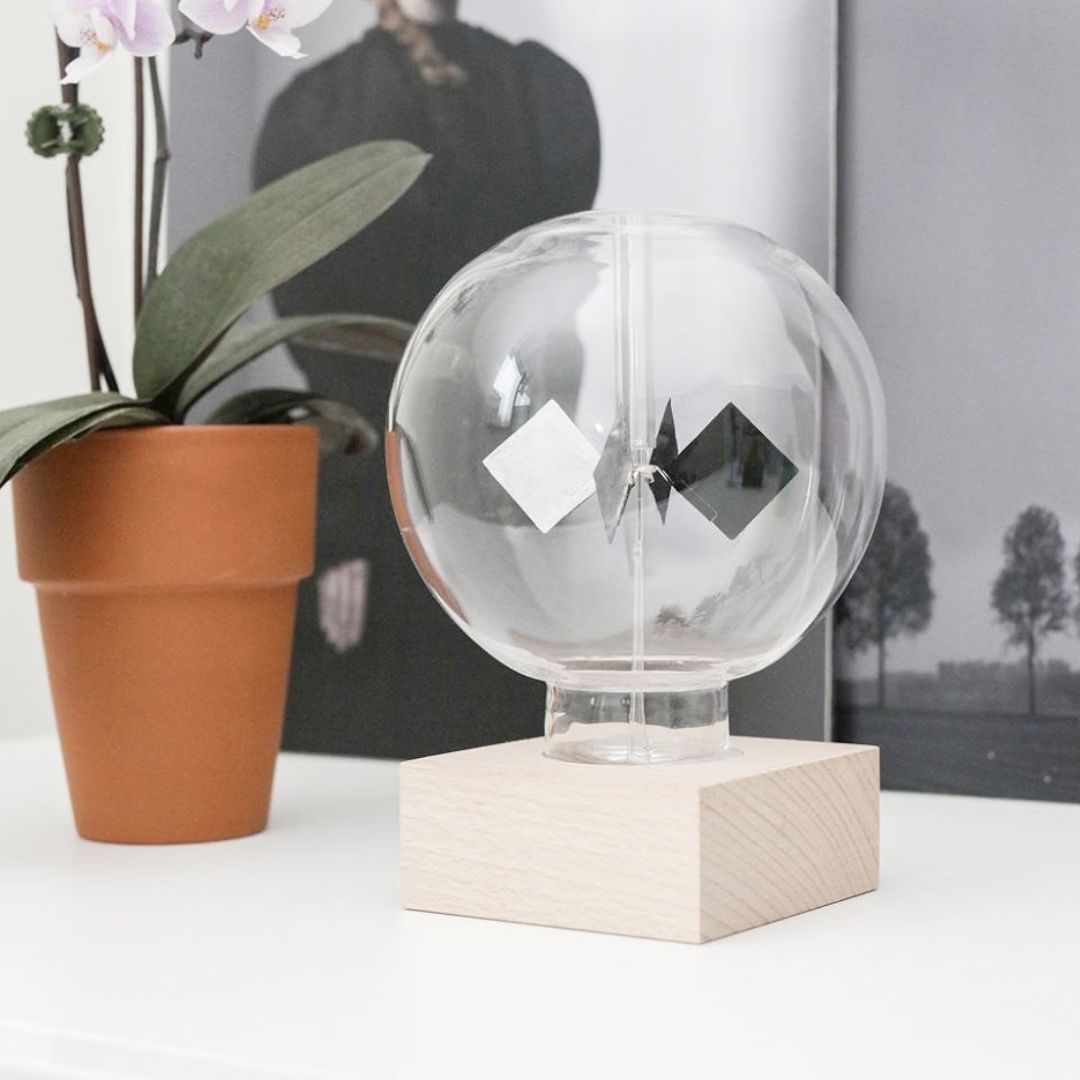
Most desk decorations wait patiently for someone to admire them. The Kikkerland Solar Radiometer puts on a little performance of its own. Inside a delicate glass bulb, a tiny set of black-and-silver vanes starts turning when the light and warmth are right. No batteries, no charging cable and no helpful office intern hiding underneath the desk with a motor.
It looks like a miniature science experiment borrowed from a Victorian inventor's workbench, which is exactly the sort of object that can turn an ordinary windowsill into an unexpectedly interesting place to stare.
🔬 A Tiny Windmill With No Wind Required
Also called a light mill, a radiometer demonstrates how absorbed light and heat can create motion. The dark sides of its vanes absorb energy differently from the reflective sides, producing temperature effects in the low-pressure gas sealed inside the glass bulb. Those effects help make the vanes spin, sometimes with surprising enthusiasm when bright sunlight pours through a window.
Despite the name, this isn't a solar panel powering a miniature electric motor. It's a physical demonstration with no electronics involved. And while it's fun to see the vanes respond to changing conditions, it isn't a calibrated instrument that will tell you exactly how bright the room is.
🪵 Vintage Science in a Very Small Package
The Kikkerland ST85 combines a glass enclosure, steel components and a simple beechwood base. At approximately 4.3 inches tall and 3.3 inches wide, it's compact enough for a desk, bookshelf or sunny corner where it can enjoy a reliable dose of light.
Direct sunlight or a suitable warm spotlight gives it the best chance to move. Ordinary fluorescent lighting may not be enough, so don't assume it's broken if it sits quietly in a dim room. The maker also notes that these handmade pieces can vary slightly. Keep the glass somewhere stable and out of reach of curious hands that might mistake it for a toy to shake.
🎁 For People Who Love Asking 'How Does That Work?'
It's a terrific gift for science teachers, physics enthusiasts, retro gadget collectors and anyone whose office shelf could use a little motion without yet another screen. The moving vanes make a neat starting point for conversations about light, heat and the odd things that happen inside a glass bulb.
It's wonderfully low-maintenance too. Find the right patch of sunlight and let physics take the afternoon shift. Your inbox, unfortunately, will still need you.
✅ Why You'll Love It
✔ Vanes spin when exposed to suitable bright light and warmth
✔ Demonstrates a fascinating heat-driven physical effect
✔ No batteries, chargers or electronics required
✔ Glass bulb with steel parts and a beechwood base
✔ Compact size suits desks and sunny shelves
✔ Vintage-inspired science curiosity with moving parts
✔ Memorable gift for teachers and science enthusiasts
-
Share:
-
-

-

-

-


☀️ The Desk Ornament That Prefers a Sunny Outlook
Most desk decorations wait patiently for someone to admire them. The Kikkerland Solar Radiometer puts on a little performance of its own. Inside a delicate glass bulb, a tiny set of black-and-silver vanes starts turning when the light and warmth are right. No batteries, no charging cable and no helpful office intern hiding underneath the desk with a motor.
It looks like a miniature science experiment borrowed from a Victorian inventor's workbench, which is exactly the sort of object that can turn an ordinary windowsill into an unexpectedly interesting place to stare.
🔬 A Tiny Windmill With No Wind Required
Also called a light mill, a radiometer demonstrates how absorbed light and heat can create motion. The dark sides of its vanes absorb energy differently from the reflective sides, producing temperature effects in the low-pressure gas sealed inside the glass bulb. Those effects help make the vanes spin, sometimes with surprising enthusiasm when bright sunlight pours through a window.
Despite the name, this isn't a solar panel powering a miniature electric motor. It's a physical demonstration with no electronics involved. And while it's fun to see the vanes respond to changing conditions, it isn't a calibrated instrument that will tell you exactly how bright the room is.
🪵 Vintage Science in a Very Small Package
The Kikkerland ST85 combines a glass enclosure, steel components and a simple beechwood base. At approximately 4.3 inches tall and 3.3 inches wide, it's compact enough for a desk, bookshelf or sunny corner where it can enjoy a reliable dose of light.
Direct sunlight or a suitable warm spotlight gives it the best chance to move. Ordinary fluorescent lighting may not be enough, so don't assume it's broken if it sits quietly in a dim room. The maker also notes that these handmade pieces can vary slightly. Keep the glass somewhere stable and out of reach of curious hands that might mistake it for a toy to shake.
🎁 For People Who Love Asking 'How Does That Work?'
It's a terrific gift for science teachers, physics enthusiasts, retro gadget collectors and anyone whose office shelf could use a little motion without yet another screen. The moving vanes make a neat starting point for conversations about light, heat and the odd things that happen inside a glass bulb.
It's wonderfully low-maintenance too. Find the right patch of sunlight and let physics take the afternoon shift. Your inbox, unfortunately, will still need you.
✅ Why You'll Love It
✔ Vanes spin when exposed to suitable bright light and warmth
✔ Demonstrates a fascinating heat-driven physical effect
✔ No batteries, chargers or electronics required
✔ Glass bulb with steel parts and a beechwood base
✔ Compact size suits desks and sunny shelves
✔ Vintage-inspired science curiosity with moving parts
✔ Memorable gift for teachers and science enthusiasts