

Give Those Old Film Slides a Digital Comeback
Give Those Old Film Slides a Digital Comeback
Couldn't load pickup availability
📷 The Family Photo Box Has Entered the Digital Age
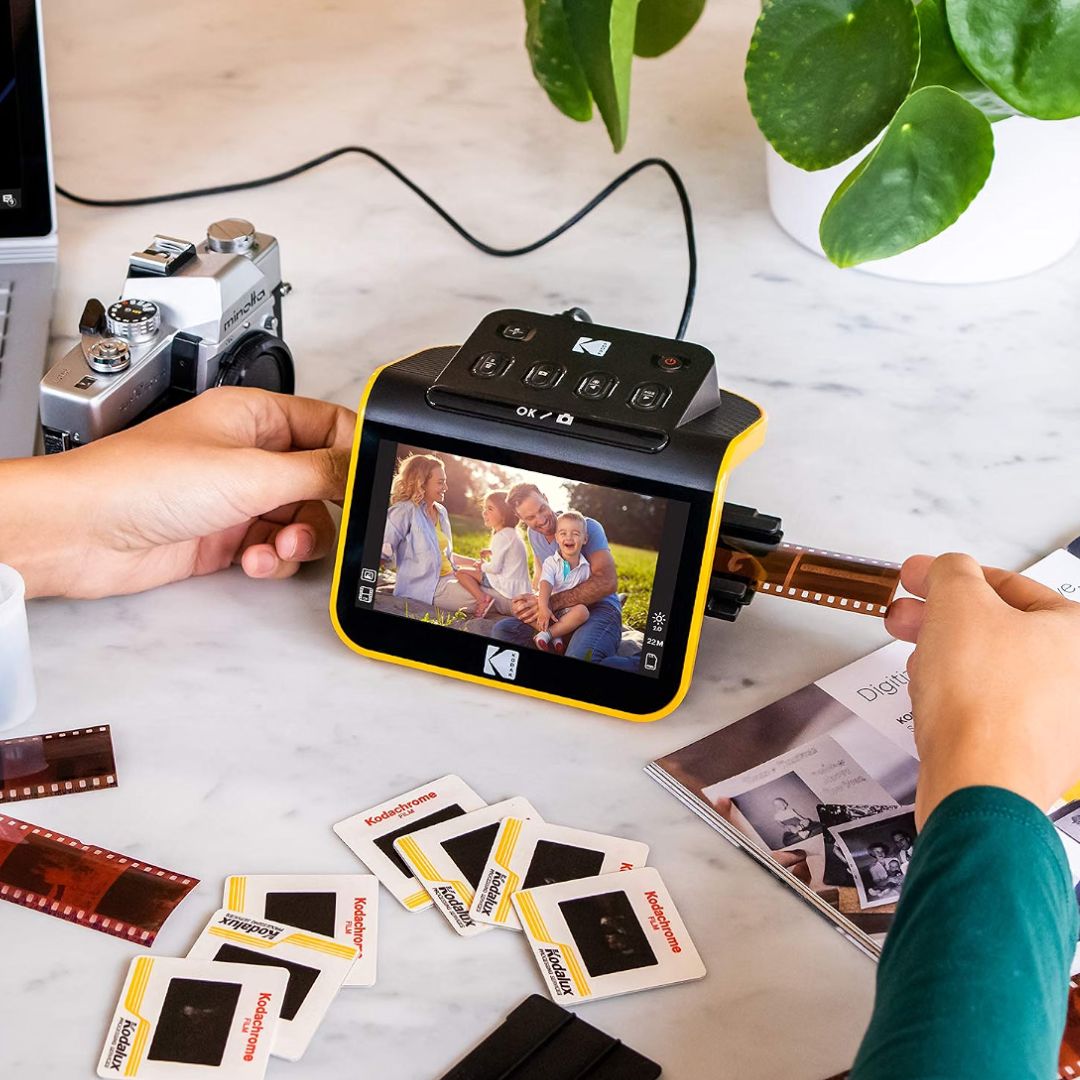
Somewhere in a cupboard, there's probably a shoebox full of old vacation slides, mystery relatives and photographs from a time when everyone's hairstyle was making a bold statement. The KODAK Slide N SCAN Film Scanner gives those forgotten frames another chance to shine. Feed in compatible film negatives or slides, preview the image on its large screen and save a digital copy without constructing a darkroom in the spare bedroom.
It's the sort of gadget that makes an afternoon of sorting family memories unexpectedly addictive. One minute you're scanning a birthday party from decades ago. The next, you're asking why Grandpa was wearing that particular hat.
🎞️ From Little Film Frames to Shareable Photos
The scanner accepts 35mm, 110 and 126 film negatives as well as mounted slides in those formats. Included holders and adapters guide the film through the machine, with a quick-feeding arrangement for working through multiple images. A single button captures a picture once you've positioned and adjusted it.
Inside is a 14-megapixel CMOS sensor, with an optional 22-megapixel interpolated output setting. That's an important distinction: the larger file size is generated digitally, not captured with a native 22-megapixel sensor. It's designed for convenient home digitizing, not professional drum-scanner restoration.
🖥️ A Big Screen for Tiny Photographs
The built-in 5-inch LCD lets you see what you're scanning without squinting at a thumbnail on your phone. Onboard controls provide basic adjustments for brightness, color and image orientation before saving. The gallery mode also turns the screen into a miniature slideshow display when you want to admire your discoveries.
Finished JPEGs save to an SD or SDHC card up to 32GB, which must be purchased separately. The package includes a slide holder, film adapters, cleaning brush, USB cable and HDMI cable. You can connect the scanner to a computer or compatible display, but don't expect it to scan paper photographs or magically reconstruct missing details from damaged film.
🎁 For the Keeper of the Family Archives
This makes an inspired gift for photography enthusiasts, nostalgic parents and the family historian who knows exactly which drawer contains the slides from 1978. Instead of letting those tiny images stay hidden, it gives someone a practical way to revisit and share them.
It can't explain every questionable fashion choice captured on film. But at least the evidence can finally make its way out of the shoebox.
✅ Why You'll Love It
✔ Digitizes compatible 35mm, 110 and 126 negatives and slides
✔ Five-inch LCD previews photos before you save them
✔ Fourteen-megapixel sensor with interpolated 22MP output option
✔ Included adapters and quick-feed design simplify film handling
✔ Basic on-device image and color adjustments
✔ Saves JPEG images to an SD or SDHC card, sold separately
✔ Thoughtful gift for photographers and family-history fans
-
Share:
-
-

-

-

-


📷 The Family Photo Box Has Entered the Digital Age
Somewhere in a cupboard, there's probably a shoebox full of old vacation slides, mystery relatives and photographs from a time when everyone's hairstyle was making a bold statement. The KODAK Slide N SCAN Film Scanner gives those forgotten frames another chance to shine. Feed in compatible film negatives or slides, preview the image on its large screen and save a digital copy without constructing a darkroom in the spare bedroom.
It's the sort of gadget that makes an afternoon of sorting family memories unexpectedly addictive. One minute you're scanning a birthday party from decades ago. The next, you're asking why Grandpa was wearing that particular hat.
🎞️ From Little Film Frames to Shareable Photos
The scanner accepts 35mm, 110 and 126 film negatives as well as mounted slides in those formats. Included holders and adapters guide the film through the machine, with a quick-feeding arrangement for working through multiple images. A single button captures a picture once you've positioned and adjusted it.
Inside is a 14-megapixel CMOS sensor, with an optional 22-megapixel interpolated output setting. That's an important distinction: the larger file size is generated digitally, not captured with a native 22-megapixel sensor. It's designed for convenient home digitizing, not professional drum-scanner restoration.
🖥️ A Big Screen for Tiny Photographs
The built-in 5-inch LCD lets you see what you're scanning without squinting at a thumbnail on your phone. Onboard controls provide basic adjustments for brightness, color and image orientation before saving. The gallery mode also turns the screen into a miniature slideshow display when you want to admire your discoveries.
Finished JPEGs save to an SD or SDHC card up to 32GB, which must be purchased separately. The package includes a slide holder, film adapters, cleaning brush, USB cable and HDMI cable. You can connect the scanner to a computer or compatible display, but don't expect it to scan paper photographs or magically reconstruct missing details from damaged film.
🎁 For the Keeper of the Family Archives
This makes an inspired gift for photography enthusiasts, nostalgic parents and the family historian who knows exactly which drawer contains the slides from 1978. Instead of letting those tiny images stay hidden, it gives someone a practical way to revisit and share them.
It can't explain every questionable fashion choice captured on film. But at least the evidence can finally make its way out of the shoebox.
✅ Why You'll Love It
✔ Digitizes compatible 35mm, 110 and 126 negatives and slides
✔ Five-inch LCD previews photos before you save them
✔ Fourteen-megapixel sensor with interpolated 22MP output option
✔ Included adapters and quick-feed design simplify film handling
✔ Basic on-device image and color adjustments
✔ Saves JPEG images to an SD or SDHC card, sold separately
✔ Thoughtful gift for photographers and family-history fans